Six-Petal Bloom
Grow a Song-style crackle glaze in six taps
Song-dynasty crackle glaze, reinterpreted in code. Pick a white-glazed vessel and tap six times in the bowl: ice-crackle shards grow from its heart toward the rim. Rotate it, find your angle, and it becomes a poster with an inscription and a vermilion seal.
Play the real build
Choose a vessel, tap six times inside the bowl, then rotate it and frame your poster. Sound on for the porcelain chimes.
The exact offline package submitted to RED (Chinese-language UI). Saving and posting need the RED app, so the build falls back to screenshot mode here.
Liù chū, “six-pointed”, is the classical name for a snowflake; níng huá is deposition — vapour turning straight into crystal. “Most flowers have five petals; snowflakes alone have six.” The tool turns that line into a gesture: six taps, one crystal bloom.
Porcelain, rebuilt in code
The question I set myself: how do you make the crackle feel natural, the glaze translucent, and the whole piece as restrained as Song porcelain, using nothing but code?
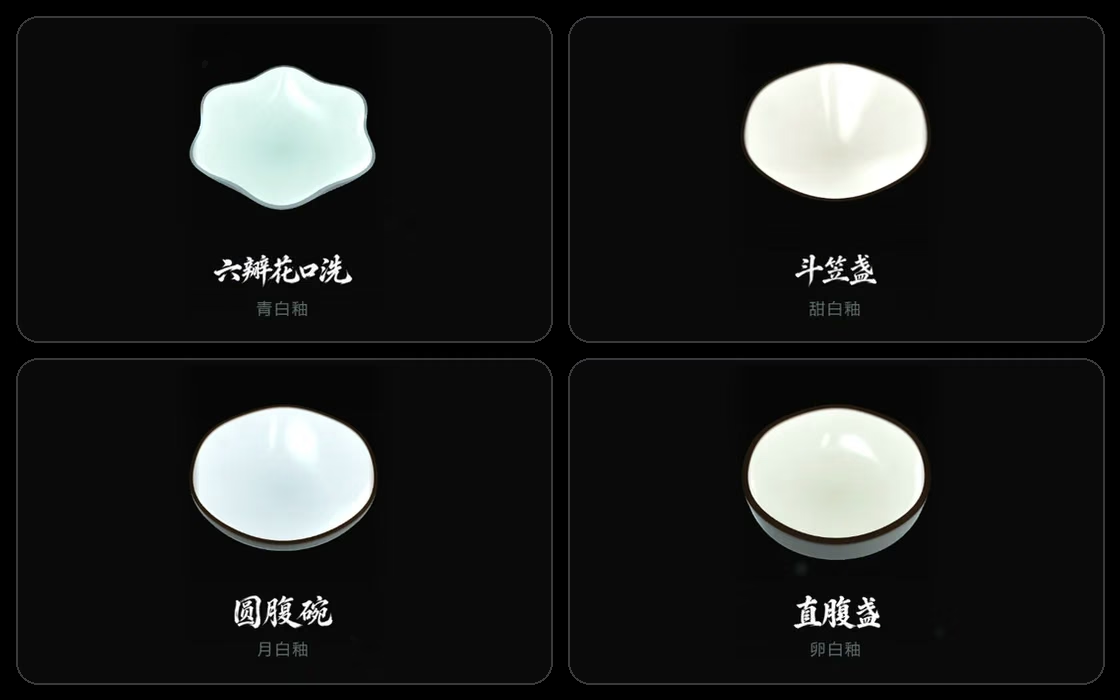
Modelled, not pasted
A bitmap couldn’t rotate or hold the glaze, so all four vessels are procedural 3D.
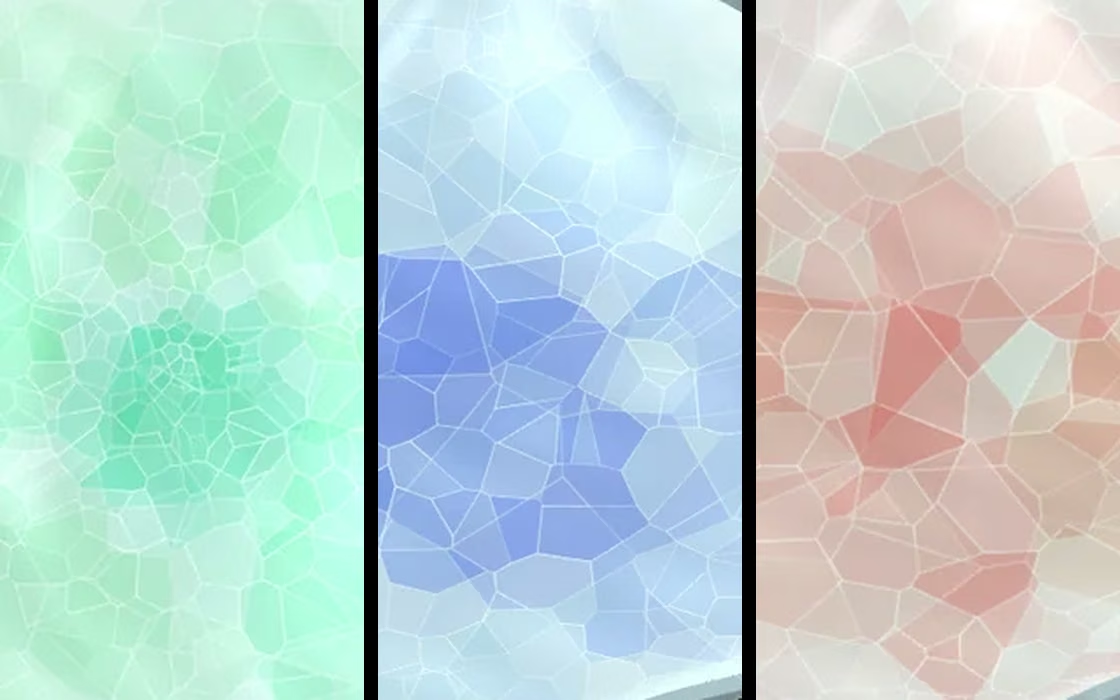
Random, yet always in harmony
Each work keeps to one family of neighbouring traditional hues, deepest at the heart and paling to the rim.
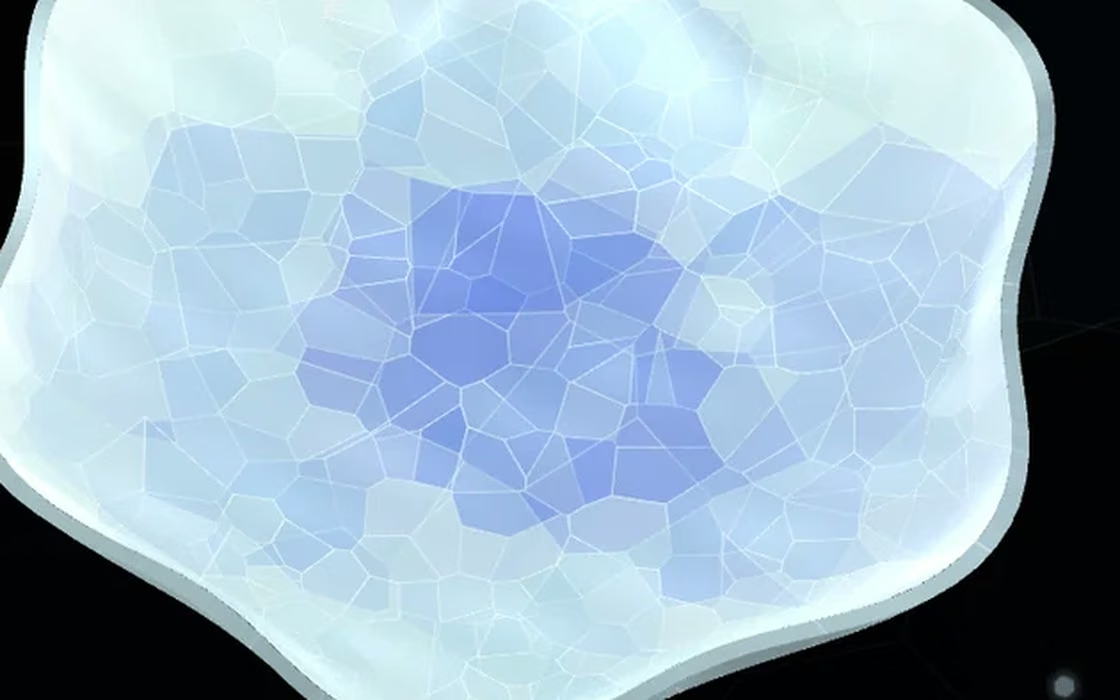
Porcelain, not glass
Reflections dim 72% over the crackle, and an ink-black ground lets the glaze glow.
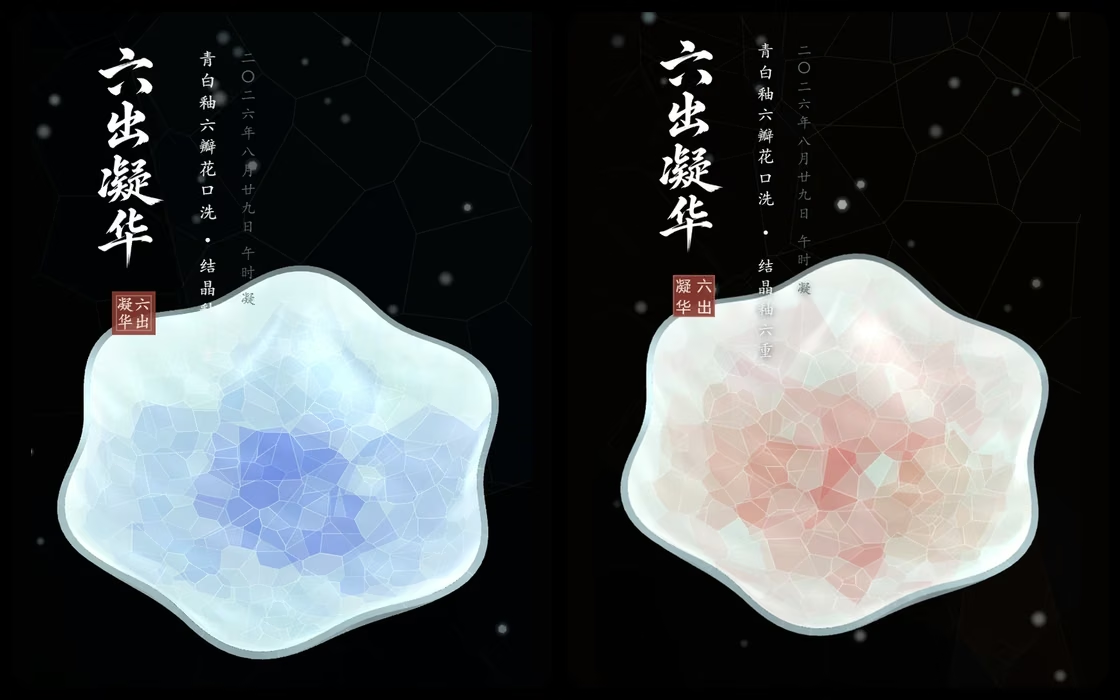
One focal point
The vessel is the only hero; a single vermilion seal is the only accent.
Twelve traditional colour anchors
Approximate swatches. Each work stays inside one family of neighbouring hues, so even a random seed stays harmonious.
One gesture, made a ritual
There is only one rule: tap six times. The name comes from “snowflakes alone have six petals”, so six taps condense one ice flower. Each step asks for one thing only.
Chinese-language product · screens shown as shipped.
Enter
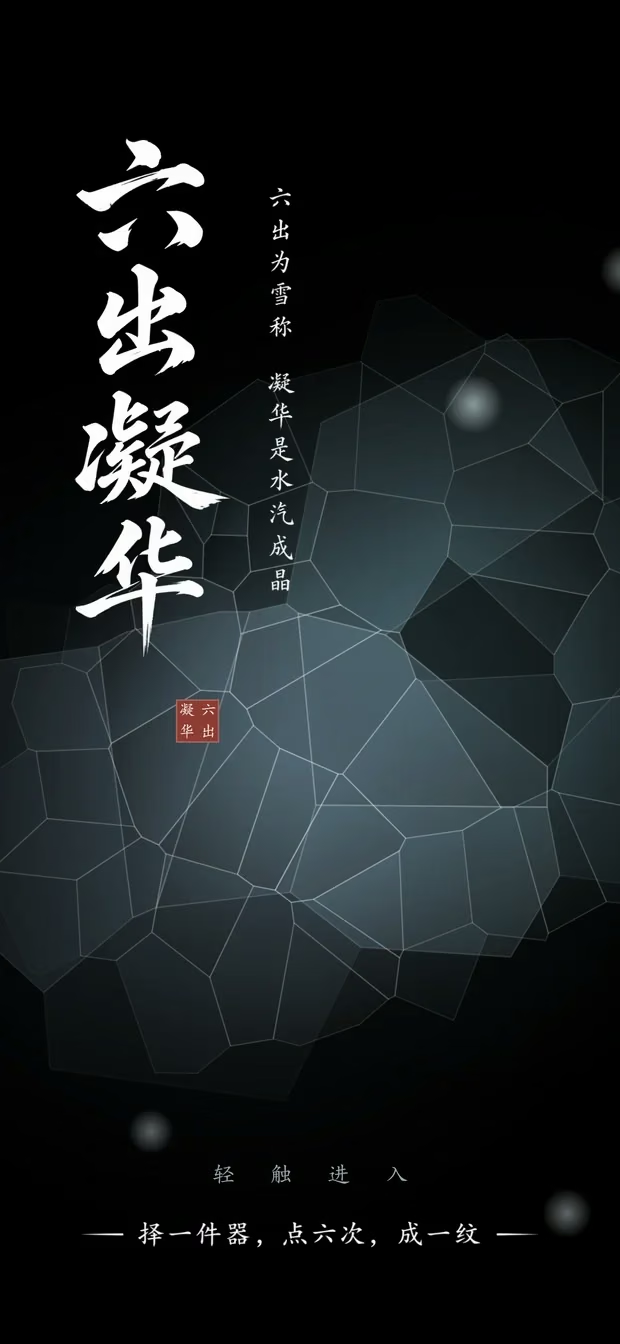
Voronoi crystals spread from the centre while the title is written stroke by stroke.
Choose a vessel
Four white-glazed forms, each rendered live in 3D.
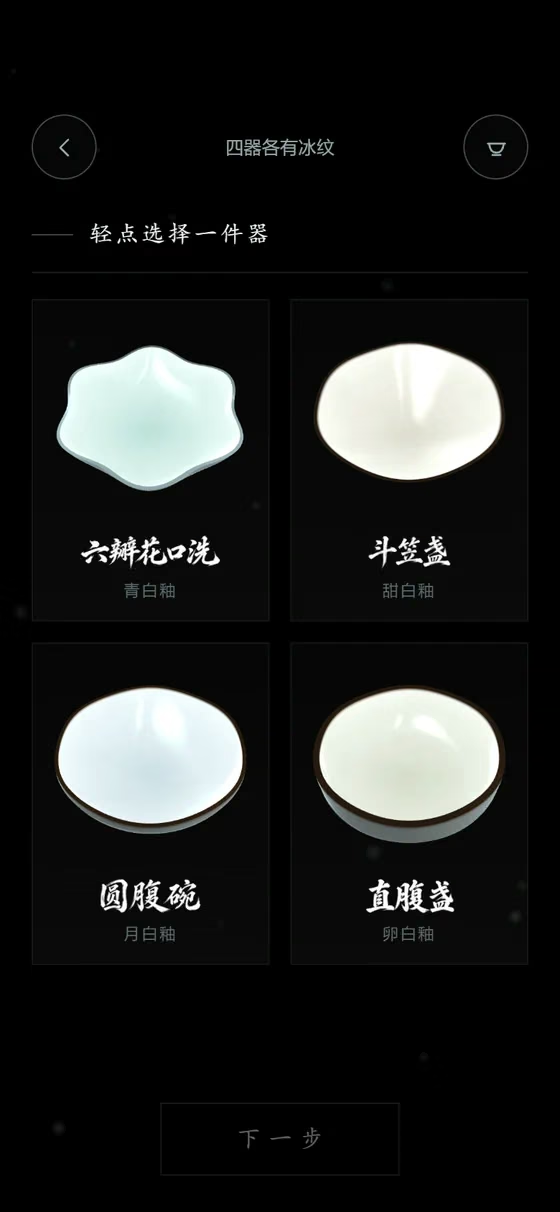
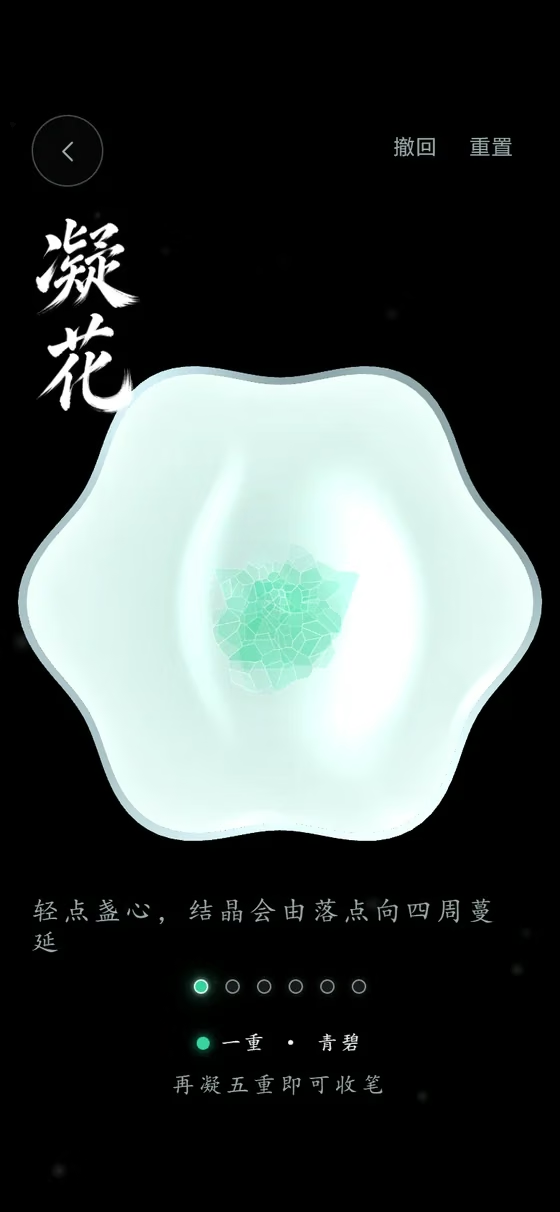
Bloom
The vessel stays top-down and still, so attention stays on the crackle. Each tap reveals a wave of shards.
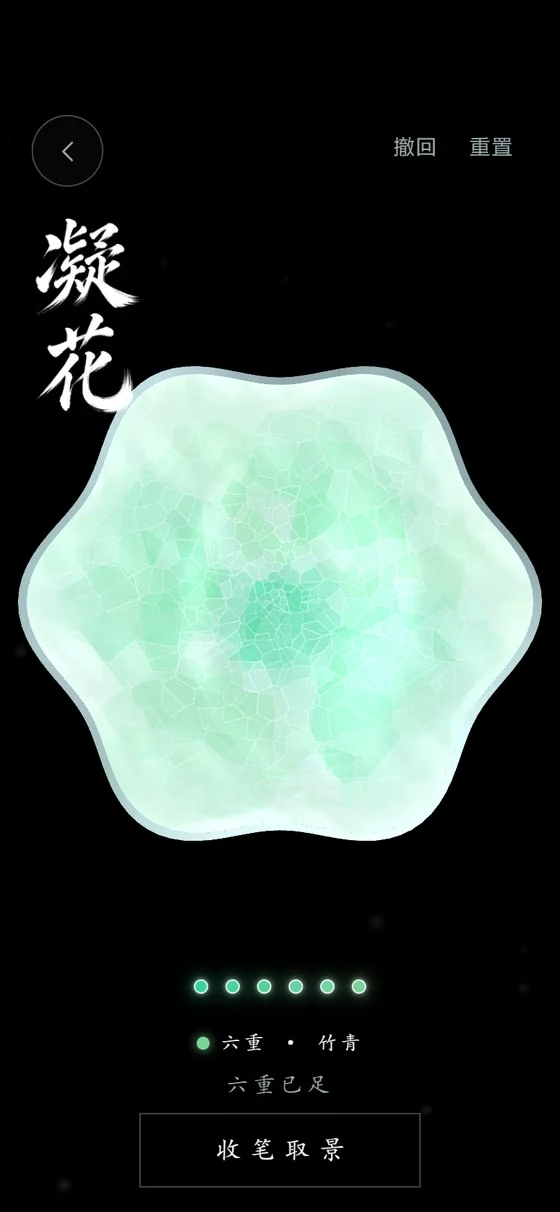
Frame
Rotate and pinch only unlock after the sixth tap — find the angle.
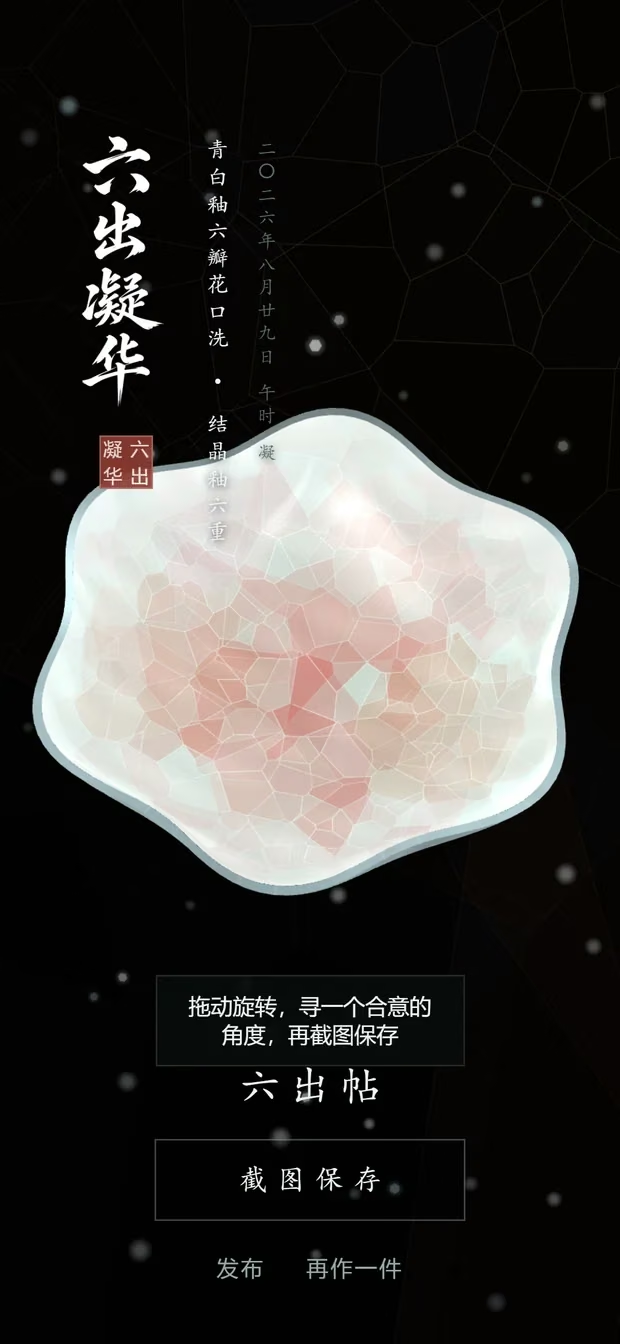
Compose
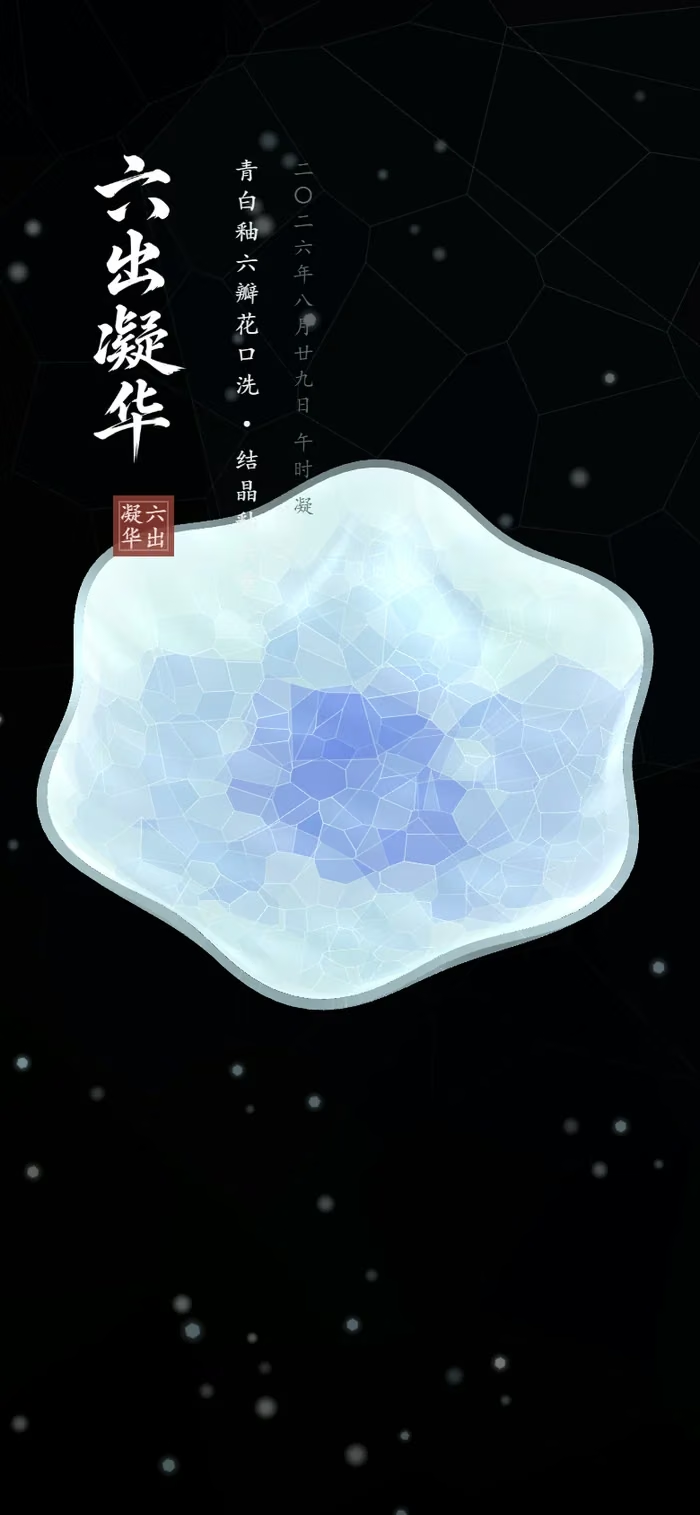
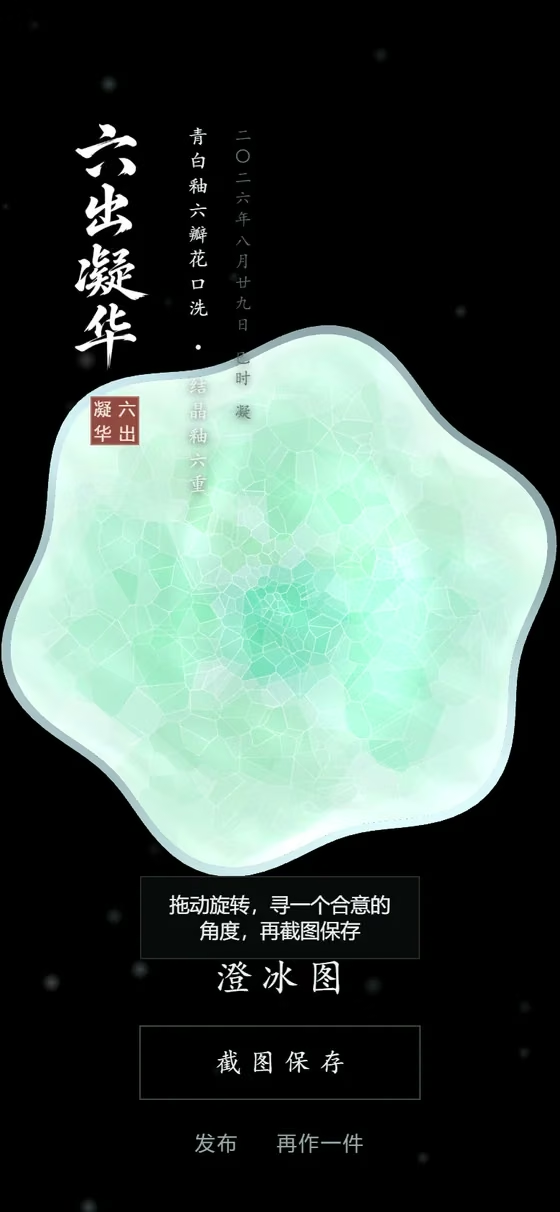
A poster with a vertical inscription, generated title and a vermilion seal.
Every piece is one of a kind
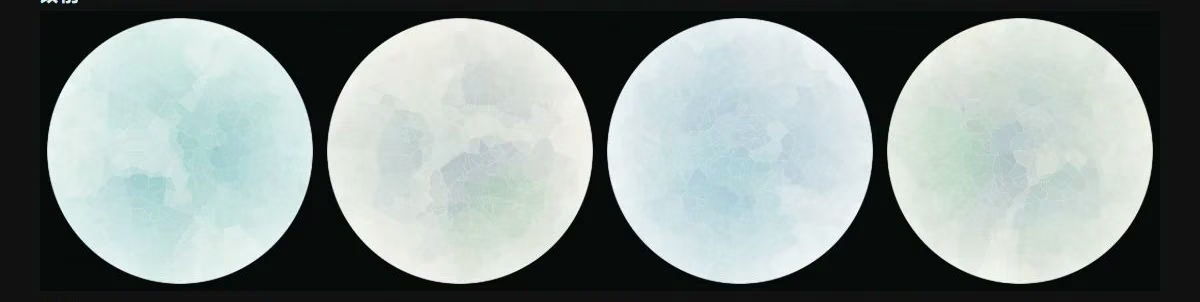
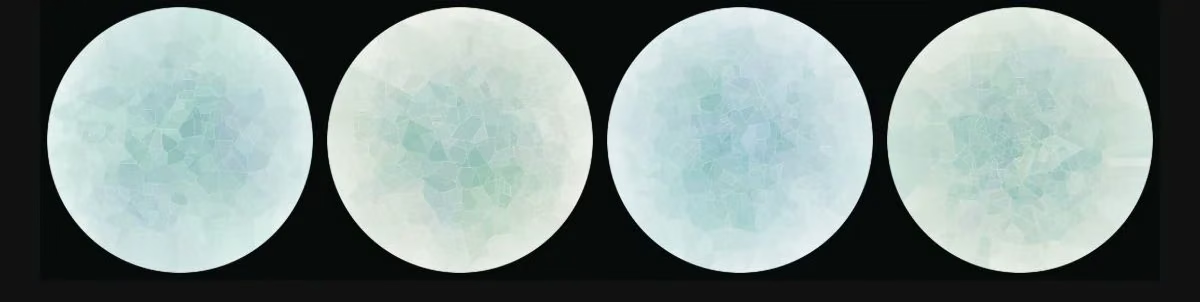
I wanted every user to leave with a work no one else has. Each session draws a random seed that decides where the shards fall, which of five shard families grows, and which family of neighbouring hues tints it. A fixed rule, each tap revealing the remaining shards ÷ the remaining taps, still guarantees the sixth tap completes the bowl. Randomness makes each piece unique; the rules keep it beautiful and always finishable.

Four seeds, four different works — two-layer Voronoi ice fields, each tinted by one family of neighbouring hues.
Three calls I overturned
The first version stood on a mist-grey page with a single bitmap vessel. Three of those calls didn’t survive, and the crackle itself was rebuilt five times.
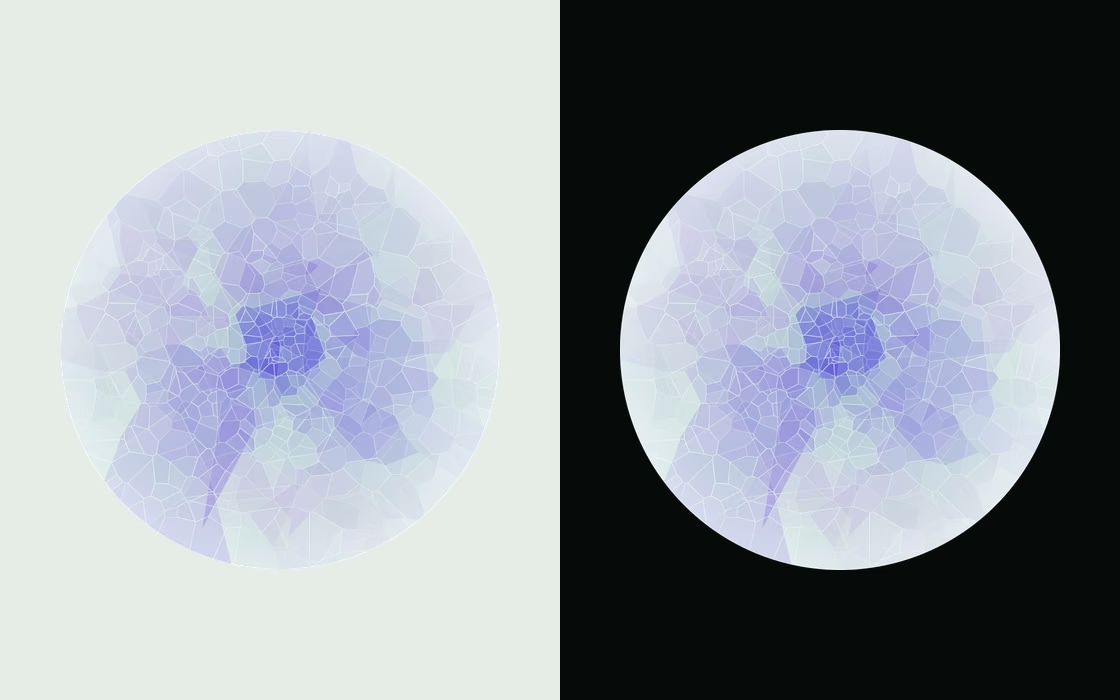
Mist grey → ink black
Mist grey washed the crackle highlights out; on ink black the glaze finally glows.
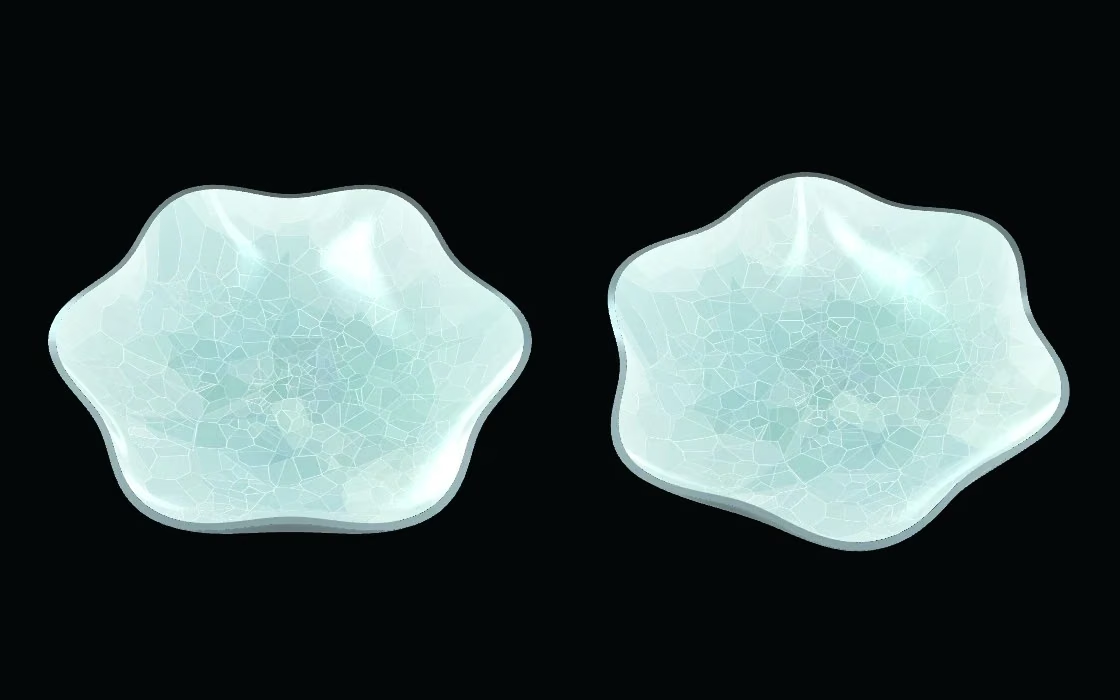
Bitmap → procedural 3D
A single 1.3 MB PNG couldn’t rotate and mapped the glaze badly; four procedural vessels now turn freely.
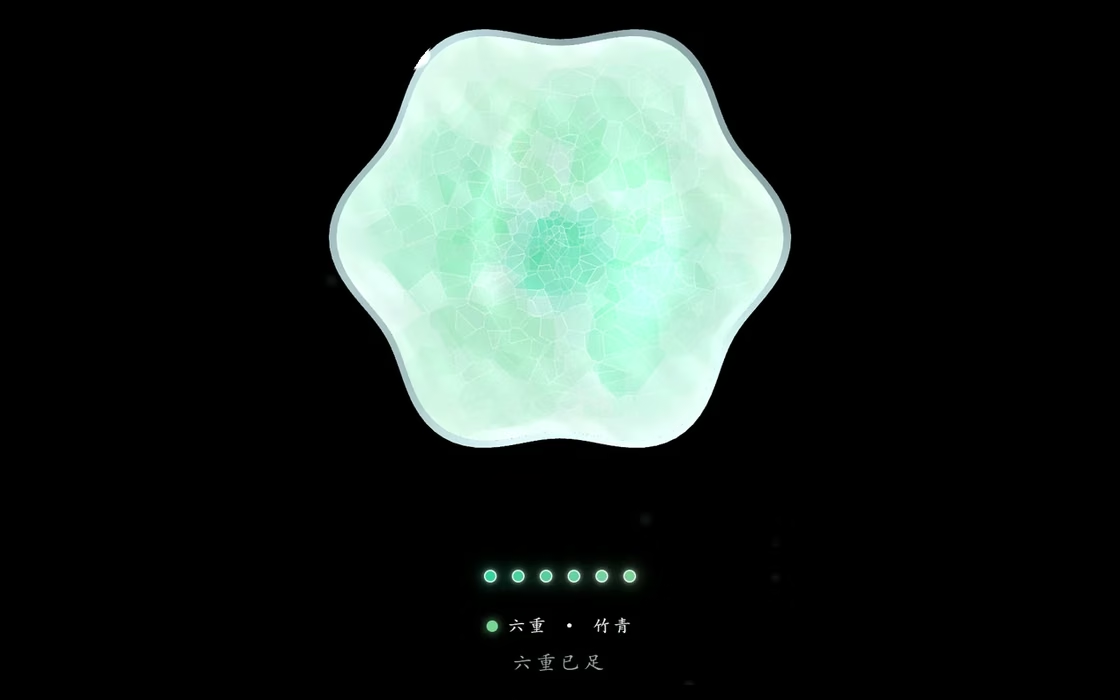
6–10 crystals → exactly six
A variable count blurred “tap six times”; exactly six made the rule itself the ritual.
The ground comparison is an illustration rendered from the current build; no v1 screen is shown.
How the crackle was rebuilt
- v2.2
Walker crack propagation — organic, but slow to read and hard to finish in six taps.
- v2.3
Single-centre branching tree — clearer, but every bowl looked alike.
- v2.4
Reveal-style Voronoi shards — each tap uncovers a wave of ice plates; finishing is guaranteed.
- v2.5
Seeded variety — five shard families (drift, current, bloom, plates, rift) plus mood palettes.
- v2.6
Clear-glaze reflection — two virtual window lights, dimmed 72% over crystals, so it stays porcelain, not glass.
A poster with its own classical title
The vessel is the only hero. Two vertical columns record vessel, glaze, date and the traditional two-hour time period; a four-character seal signs it. Every work gets a generated title — “Clear Ice” and “Six-Point Album”.
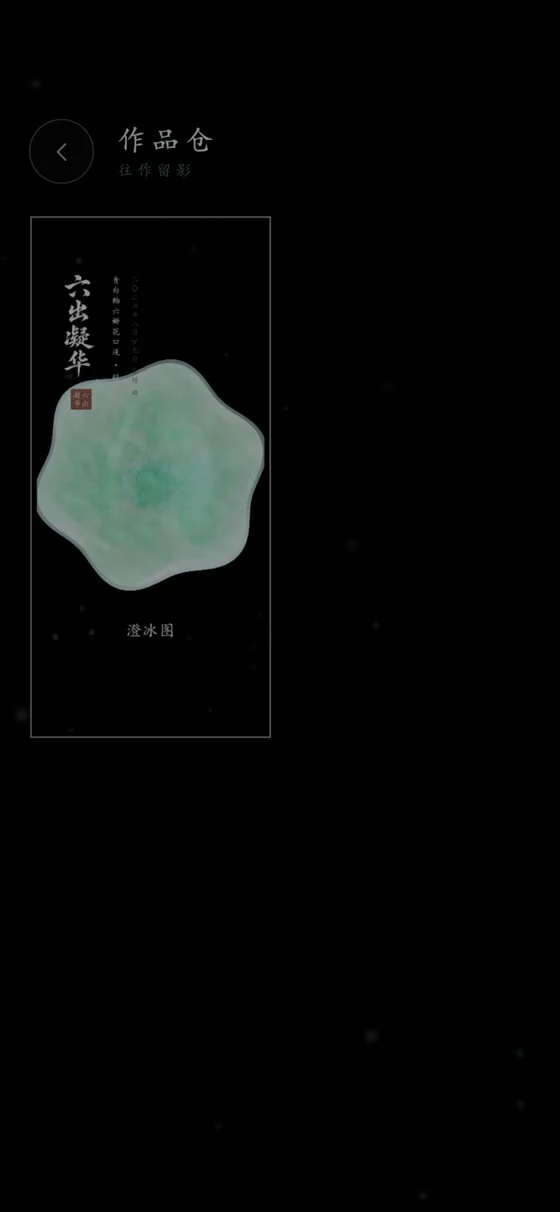
Save to album or publish to RED through the native bridge; if it’s unavailable, a clean screenshot mode takes over. A local archive keeps the last eight works.
Explored with AI, hand-written in WebGL
I used AI coding to try several generation approaches quickly, then hand-wrote the WebGL that shipped: a custom lathe renderer, seeded Voronoi ice fields and a polar glaze texture, fully offline inside RED’s 10 MB sandbox.
Motion carries the mood: the crackle spreads from the centre, the calligraphic title is written stroke by stroke, and every tap rings like porcelain.
Tests passing
Max pointer handler
Long tasks at 2× CPU throttle
Bitmap vessels shipped